
AUTOMATION INTEGRATION
Automotive Rear Lamp Over-Molding Process


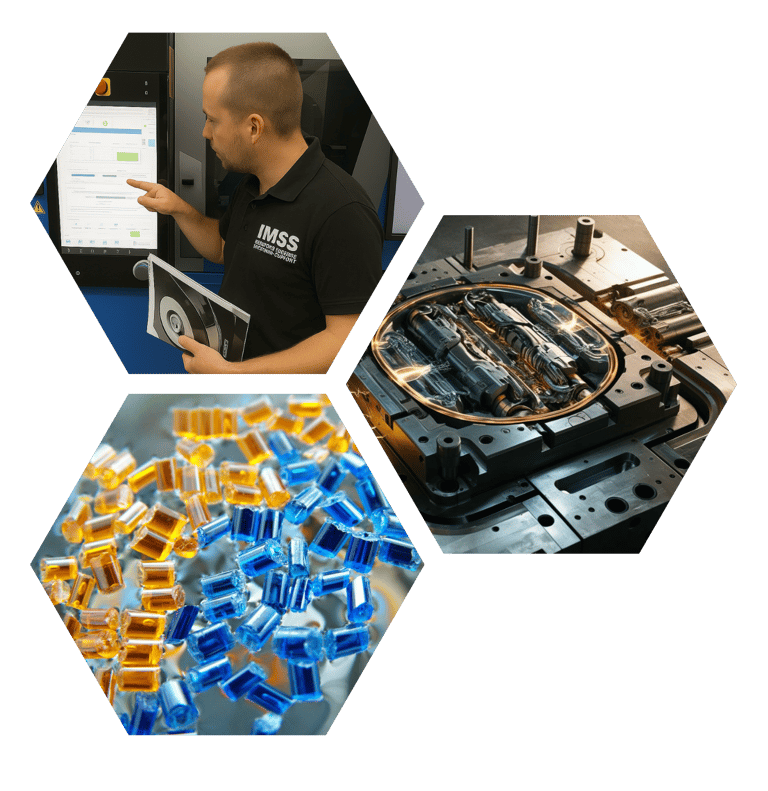
In this project, I designed and implemented an automated system for inserting components into the over-molding process of a rear lamp lens.
The goal was to improve quality consistency, reduce manual intervention, and increase overall production efficiency through the integration of robotics and advanced automation.
OVERVIEW
CHALLANGE
The manual insertion of components led to inconsistent quality, higher scrap rates, and extended cycle times, which affected output and reliability.
Integrating robotic handling and automated feeding required precise calibration and synchronization with the molding process — a key challenge in high-precision automotive manufacturing.
SOLUTION
Integrated a robotic arm for precise and repeatable part placement.
Developed and calibrated an automated feeding unit to maintain a seamless flow of components into the production line.
Optimized process parameters to synchronize with the automated system, reducing variability and defects.
Implemented quality monitoring protocols to ensure stable and reliable operation.
Scrap Rate Reduction: 35% decrease through robotic precision and process stability.
Cycle Time Improvement: 20% faster production due to optimized process synchronization.
Enhanced Automation: Fully synchronized workflow between robotic handling, feeding units, and molding operations.
Consistency and Reliability: Delivered a stable, repeatable process with minimal operator intervention.
RESULTS
The successful automation of the over-molding process set a new benchmark for efficiency and precision in production.
This project demonstrated how combining automation with process optimization can deliver measurable, long-term improvements in performance, reliability, and product quality.
OUTCOME





WHY AUTOMATION MATTERS?
CONSISTENT QUALITY AND PRECISION
HIGHER EFFICENCY AND LOWER COSTS
ENCHANCED PROCESS CONTROL
Automation minimizes human variation by ensuring every part is molded, handled, and assembled under the same controlled parameters.
Robotic systems and automated feeders maintain precise timing and positioning, reducing defects and improving repeatability — key for automotive and high-volume applications.
By automating part handling, insert loading, and quality checks, manufacturers shorten cycle times and reduce scrap rates.
Automation also allows continuous production with minimal downtime, leading to higher overall equipment effectiveness (OEE) and better resource utilization.
Automated systems enable real-time process monitoring, providing valuable production data for optimization and predictive maintenance.
This data-driven approach supports smarter decision-making, traceability, and long-term process stability, which are essential in today’s competitive manufacturing environment.






CONTACT US
If you're interested in hearing more about the way we work, have a business proposal, or are interested in making a purchase, we'd love to hear from you.
